Wednesday, 8 March 2017
Death, Obituaries and Satire
Exploring Obituaries
An obituary is a text found in newspapers and, increasingly, online which outlines the life and achievements of someone who has recently died.
As with all texts, there are some key linguistic and stylistic features which are common to this form of writing:
Purpose: to inform the reader about someone's life and achievements; to show respect for a person's life and to give a truthful account of their life.
Audience: reader interested in the life of that person - often well known; can be interesting to find out about people you didn't know about; part of the newspaper - towards the back - adult audience - broadsheet reader.
Structure & Discourse: written mode; introductory paragraph with the name, age, date / reason of death, overview of what they were well known for (this can be over a couple of paragraphs before starting the chronological account of a life); predominantly past tense. Present tense used to describe the family left behind e.g he is survived by...../ he leaves a wife and two children....; paragraphs reflect different aspects of the person's life; clear discourse markers to denote a chronological structure e.g then. after that, in 2006; starts with birth and parentage > education> marriage / relationships> key jobs > key interests>reference to the funeral; third person.
Lexis & Semantics: proper nouns with names and places important in the person's life; lexical field of family; lexical field of area person was involved with e.g business, art etc; positive use of lexis; adjectives to describe character and achievements; modified formal - accessible lexis. Not reliant on imagery.
Grammar: declarative in mood - informative in tone; use of embedded clauses to add information about the person; starts sentences in a variety of ways e.g with subordinate clauses; sometimes use of quotation in direct speech; no contracted forms;
Phonology: an obituary in a newspaper might have a headline - alliterative, pun (if appropriate) but phonological features are not a specific feature.
Read through the example obituaries below and aim to identify as many features as you can:
Peaches Geldof
Sargy Mann
Major General Walsh Obituary
Exploring Swift's 'A Satirical Elegy on the Death of a Late Famous General'
Jonathan Swift Work
A Satirical Elegy Cut Up
Extension reading: Guardian Article on the poem

Thursday, 2 March 2017
She Walks in Beauty by Lord Byron
Hello
Today you will be exploring and analysing the poem 'She Walks in Beauty' by Lord Byron.
1. Spend 15 minutes researching Lord Byron. What makes him an interesting character? Which literary period is he associated with? What are the key features of that period? What is a 'byronic hero'?
2. Read the poem carefully and annotate thoroughly. How is the woman presented? What attitudes does the speaker have towards the woman? You can use the framework for guidance or you can use the more specific questions attached here. You can choose the level you work at. Perhaps start off with the challenge and then move on to the focussed questions.
3. By the end of the lesson you need to have a summative paragraph on the speaker's attitude to the woman.
EXT: Continue your work from last week finding points of comparisons between the poems with the theme of love.
Your first focus should be on creating a summary of each poem with a focus on the different attitudes and themes considered in each poem about love.
Thursday, 23 February 2017
There is a Garden in her Face
Dear All
Today you will be exploring the poem 'There is a Garden in her Face' by Thomas Campion. The aim of the lesson is to understand some of the Elizabethan ideals of beauty and how this has an impact on some of the images the poet uses. You will also be focussing on the different linguistic and literary devices used throughout the poem. Finally, I would like you to make connections with other poems we have studied.
Task 1: Read the poem. Who is the speaker? Who is he describing? What do we learn about the speaker and the person the poem is about?
Task 2: How does the person described match the Elizabethan notions of beauty? Refer to Elizabethan Beauty 1 and Elizabethan Beauty 2
Task 3: How is the poem structured? What rhythm does it have? What is the rhyme scheme? How is the structure repeated? What effect does the rhyme, rhythm and structure have?
Task 4: Create a collage of images from the poem and write quotations underneath the images you have chosen. Aim to illustrate the poem in as much detail as possible.
Task 5: Find examples of declarative tone; positive adjectives; colour imagery; imagery of wealth and exoticism; alliteration; simile; metaphor; dynamic / violent verb; anaphora; discourse marker to show opposition;
Task 6: Find a range of thematic AND linguistic connections to other poems we have studied which share the theme of love. Think about similarities in how the poets present their ideas and attitudes to love.
Enjoy!
Nina
Thursday, 9 February 2017
Shakespeare's Sonnets
Hello!
Let's do some Shakespeare!
Today you are going to do some research on sonnets, finding out about the structure of a Petrarchan and Shakespearean sonnet and about the themes associated with the form.
You will explore two of Shakespeare's sonnets: Sonnet 73 and Sonnet 130. Your objective is to be able to compare and contrast how Shakespeare presents the theme of love in these sonnets.
We will work through the tasks on this PPT.
Have fun! 😄
Thursday, 2 February 2017
Love and Relationships Essay
Dear all
You should now have notes on To My Dear and Loving Husband and the article on What are the Tricks to a Happy Marriage?
Using your notes, write response to the following task:
How is the theme of relationships presented in To My Dear and Loving Husband and What are the Tricks to a Happy Marriage?
You have the lesson to complete the task.
Nina
Thursday, 26 January 2017
Comparative Writing
Hello
Lots and lots to do today! There is a real focus on building up comparisons between texts as well as continued focus on analysing a text closely. By the end of the lesson you should be able to show me at least two well constructed paragraphs!
Task One
In pairs, look through your notes on To My Dear and Loving Husband and How do I Love Thee?
Add any notes to your framework.
Task Two
In pairs, write an overview of each poem. This would form an introduction to a piece of writing on the texts for example to respond to the question: How is the theme of love presented in To My Dear and Loving Husband and How do I Love Thee?
Make sure you comment on the following (GRAMPS):
Genre - what type of text is it? Fiction? Non-fiction? Literary? Crafted? Where is it from? Where would you find it?
(W)riter - when were they writing? Male? Female? Is this important?
Audience - who is the text aimed at? Why would they want to read the text?
Mode - is it written? Are there spoken elements?
Purpose - what is it for? What does it do? Does it have more than one purpose?
Subject - this is the most important bit! What is the text about? What are the key themes, ideas and attitudes presented in the texts? What are the key similarities and differences to the txts? Make sure you explicitly link to the title of the essay.
Task Three
Read the text on Happy Marriage. Copy and paste the text into a word document and annotate thoroughly using the framework as a guide.
This text was used as a comparison with the Anne Bradstreet poem. You can read the mark scheme for some more ideas.
Task Four
Write at least one comparative paragraph discussing how the theme of marriage is presented in the texts.
Happy comparing!
Nina
Friday, 13 May 2016
A2 Commentary Writing
- Read through the different exemplar commentaries and complete the table in the link below:
Exemplar Commentary Task
- Write or revisit a commentary for the obituary task (or another one if your prefer - you could redo the exam one). Aim to write a more comprehensive version of it, focussing on why you have chosen specific lexical and semantic choices in particular.
- Text Adaptation Task: Writing in the Tropics
Radio 4 is running a series of programmes on the theme of 'World Cities'. Using information from page 274 (third paragraph) to page 275 ( before the break), write an introduction to and a segment of the programme based on the theme of noise.
Wednesday, 11 May 2016
AS Lang Lit Writing Introductions
Structuring Your Essay
Remember to organise your writing using the framework approach. You will have:
Remember to organise your writing using the framework approach. You will have:
- an introduction where you give a contextual overview of each text and comment on the main subject of the poem and the other text
- a section on discourse and structure
- a section on lexis and semantics
- a section on grammar
- a section on phonology
Refer to your poetry framework as this is relevant for both texts! See here
Writing the overview:
Make sure you comment on the following (GRAMPS):
Genre - what type of text is it? Fiction? Non-fiction? Literary? Crafted? Where is it from? Where would you find it?
(W)riter - when were they writing? Male? Female? Is this important?
Audience - who is the text aimed at? Why would they want to read the text?
Mode - is it written? Are there spoken elements?
Purpose - what is it for? What does it do? Does it have more than one purpose?
Subject - this is the most important bit! What is the text about? What are the key themes, ideas and attitudes presented in the text?
Task: Compare the way in which the writers present ideas and attitudes about place in 'Spellbound' and an advertising feature about Iceland.
Write an introductory paragraph.
Using Quotations
It is important to embed quotations correctly. Aim to integrate them into your writing. Remember your quotations will need some context if it is not evident what the context is! Here are a couple of examples:
Example 1
Bronte creates a depressing tone through the image of the trees "bending / their bare boughs weighed with snow." The use of the dynamic verb "bending" creates a sense of downward movement, suggesting a feeling of heaviness and being weighed down. This links to her idea of being rooted to one spot. The alliterative use of the plosive 'b' sounds adds to the feeling of heaviness, along with the steady rhythm created by the monosyllabic lexical choices.
Example 2
Irwin draws the boys attention to the type of student they will be competing against at their Oxbridge interviews; boys and girls from a much more privileged social and educational background to them. Irwin suggests that the boys should "hate them" because they "have been groomed like thoroughbreds for this one particular race." The simile highlights the competitive nature of a higher social class, the use of the noun "thoroughbred" shows they are part of the elite, with connotations to horse racing and being a superior animal. The dynamic verb "groomed" has overtones of being pushed to present themselves in an attractive way, the verb also recalls the headmasters concerns that the boys lack presentation or as Mrs Lintott suggests ironically "a sprig of parsley."
Developing your skill
Now aim to continue your analysis of Song and the Iceland text - following the framework approach and integrating quotations effectively.
Finally - the table you did as a class outlining the framework features of different text types See me for copies of the texts you explored.
Friday, 6 May 2016
A2 Language and Literature Obituary Writing
An obituary is a text found in newspapers and, increasingly, online which outlines the life and achievements of someone who has recently died.
As with all texts, there are some key linguistic and stylistic features which are common to this form of writing:
Purpose: to inform the reader about someone's life and achievements; to show respect for a person's life and to give a truthful account of their life.
Audience: reader interested in the life of that person - often well known; can be interesting to find out about people you didn't know about; part of the newspaper - towards the back - adult audience - broadsheet reader.
Structure & Discourse: written mode; introductory paragraph with the name, age, date / reason of death, overview of what they were well known for (this can be over a couple of paragraphs before starting the chronological account of a life); predominantly past tense. Present tense used to describe the family left behind e.g he is survived by...../ he leaves a wife and two children....; paragraphs reflect different aspects of the person's life; clear discourse markers to denote a chronological structure e.g then. after that, in 2006; starts with birth and parentage > education> marriage / relationships> key jobs > key interests>reference to the funeral; third person.
Lexis & Semantics: proper nouns with names and places important in the person's life; lexical field of family; lexical field of area person was involved with e.g business, art etc; positive use of lexis; adjectives to describe character and achievements; modified formal - accessible lexis. Not reliant on imagery.
Grammar: declarative in mood - informative in tone; use of embedded clauses to add information about the person; starts sentences in a variety of ways e.g with subordinate clauses; sometimes use of quotation in direct speech; no contracted forms;
Phonology: an obituary in a newspaper might have a headline - alliterative, pun (if appropriate) but phonological features are not a specific feature.
Task 1: Find an example of an obituary and identify as many of the features as you can. You can use a copy I have in class or follow the links here: Peaches Geldof Obituary Sargy Mann Obituary
Task 2: Using a House in Corfu by Emma Tennant from the start of the second paragraph to ...."any sense of a gloomy haunting" (page 285), write an obituary for Emma's father for an English newspaper. He is not named in the text so you can make up a name for him.
Work out key dates, family ties, important places, key events etc from the text.
Task 3: Write a commentary - explain how you structured your piece, the key lexical choices you made and why; what type of mood you were trying to create through your grammar choices etc.
Wednesday, 4 May 2016
The Collar by George Herbert
George Herbert was well born but socially responsible, educated but devout, experienced in the ways of the world but fully committed to the ways of the church, and knowledgeable about both the pains and joys of spiritual life. Herbert is known as a metaphysical poet. Metaphysical poetry explores the themes of love and religion, exploring and questioning our place in the world. The pain and difficulty of being loyal to God are explored in Herbert's most famous poem 'The Collar'.
The poem is an emotional outburst after a momentary loss of faith for the narrator. He has had enough of being tied in to serving a God and longs to be free and to have control of his own life and destiny. However, it is very questioning in tone and the reader gets a sense of his uncertainty all the way through in his doubt and possible rejection of God. The narrator wants to escape and break free from the constraints of life as a whole - be free from responsibility. It is a very personal response and the reader gets a real sense of the speaker's voice. We need to look at some of the techniques Herbert uses to show the reader the argument the speaker is having with himself about the struggle he is having with his faith.
Structure and Discourse:
How is the poem structured? What does it look like on the page? What could this suggest about the speaker's thoughts? Can you find examples of phrases that sound very spoken in style? How does Herbert achieve this? What conjunctions are used to show this is an argument?
Lexis and Semantics:
This is an emotional outburst. Can you find the verbs, nouns or adjectives that show his emotions and explain the effect they have? You could explore: anger, frustration, regret, sadness...
The title has a couple of connotations. A collar can be seen as restrictive - not particularly harmful but does have references to being tied to something. There is also a religious reference to collar, as that is what the Christian clergy wear around their necks. What other words and phrases can you find that show restriction?
There is a sense in this poem of the speaker doubting God and feeling tired of serving him. How is God represented in the poem? Can you find some lexical choices that make him seem someone with authority?
At the end of the poem, the lexical choices point to madness rather than a rational argument against God. Which words show this? What type of words are they?
How is God presented at the end of the poem when he says 'Child'? What sort of relationship is suggested here? How do you think the speaker feels at the end of the poem?
Grammar:
What is the effect of all the interrogatives? How do they add to the tone of the poem?
What is the effect of the exclamatory sentence?
The speaker also uses an imperative tone as he tries to convince himself to unbind himself from God and life - can you find an example of that?
The speaker also tries to sound convincing through the use of the modal verb 'will' e.g. 'I will abroad' (which he repeats twice). Are you convinced by his wanting to leave the comforts of what he knows?
What are the effects of the minor sentences?
Phonology:
There is plenty of rhyme in this poem but it is quite unstructured. Why is this do you think?
Look at the rhyme at the end of the poem wild / child and word / Lord - why have these been rhymed? How do they fit with the end of the poem and the speaker's reconciliation with God?
Key poetry terminology: Poetry Glossary
Revision Framework for Poetry: Poetry Framework
Friday, 22 April 2016
Comparative Commentary Writing
- Review of the features of a nature documentary script.
- Write a script using one of the clips from 'The Hunt' - see previous post for link
- Using the framework here write a commentary highlighting and explaining the language choices you made for each of your spoken pieces. Remember to give examples and explain the effect you were trying to achieve.
- This will help to remind you of some of the key features of the introduction to a radio broadcast: Ozymandias and Radio Broadcast Link
Don't forget your homework - a comparison of Ozymandias and the article on the statue of Saddam Hussein. Compare and contrast the ways in which the writers present powerful figures. This is for next Tuesday.
There is some extension reading on the difference between tabloid and broadsheets for you. Please collect and you can use it to inform your understanding of the linguistic and stylistic features of news articles.
Wednesday, 20 April 2016
God's Grandeur and Writing a Voiceover
God's Grandeur by Gerald Manley Hopkins
God's Grandeur is a poem a written in sonnet form (Italian - 8 lines then 6 lines) exploring the relationship people have with nature and God. It is an extremely dense and complicated poem, with lots of interesting use of language and it is not very positive about people! The speaker seems quite distant from others around him (or her).
The speaker of the poem is very critical of the way people treat the earth and the world around them, and aims to remind the reader about the glory of God and his role in creating and managing the world, at a time when Man seemed intent on destroying it (think about the massive growth in industry over the course of the nineteenth century. The speaker believes the earth is heading for destruction and is essentially temporary. However, nature does seem to have a capacity for continuation, night turns into day, because God is there to protect.
- What type of sentence is the opening line? What mood does it create? What is the effect of the verb 'charged'? What are its connotations?
- What does the speaker suggest will happen to the world in lines 2 & 3? What is the effect of the imagery used?
- What type of sentence is used in line 4? Why? What are the connotations of the noun 'rod'? What word does 'reck' make you think of that could also be relevant in the context?
- Why has Hopkins repeated 'have trod' in line 5?
- How does Hopkins show the reader how critical he is of how people are living in lines 6 & 7? What are the key lexical choices? How does he use sound to capture this too? How does he show his distaste for Man?
- How does he demonstrate how he feels about our destruction of the earth and how relationship with nature in line 8?
- What is the shift in line 9? What conjunction does he use? What does 'spent' mean? Does it link to any other words in the poem?
- What type of word is 'dearest'? What does he mean by 'deep down things'? What does this suggest about how he thinks people normally live their lives?
- He use 'and' to start the line again (line 11). Why does he do this?
- How does he describe the cycle of night and day in lines 11 & 12? What effect does the dynamic verb have?
- Why is there a cycle of day and night? How does he present God as a protector of Earth (despite the fact that it is 'bent' what does this suggest?) and make God sound like someone who nurtures?
Nature Documentary Voiceover: Creative Writing
Watch two examples from the series of nature documentaries called 'The Hunt' narrated by David Attenborough. You need to watch 'The Silent Assassin' and 'Fast Food.' Read the scripts and answer the questions about the stylistic and linguistic features of the text.
Choose another one of the clips and write your own voiceover!
Friday, 15 April 2016
Writing Articles
The aim of today's lesson is to explore the stylistic and linguistic features of different articles.
The first article is from The Guardian online and is a news article:
http://www.theguardian.com/world/2016/apr/14/japan-earthquake-kyushu-people-feared-trapped-under-rubble
The second article is from a home improvement magazine. House Renovation Text
What is the context of each text? Comment on audience, purpose, mode of delivery, subject matter, level of formlity etc - see guide for full list! Framework and Context Guide
Make notes on the key stylistic and linguistic features of each text. Ensure you think about structure & discourse, lexis & semantics, use of grammar. Link your points back to the context of the texts. Us the framework for some language prompts if you need it.
Choice of task:
EITHER
Write a newspaper article about the fire in Lily Brett's coop building. Use the whole piece as your source text.
OR
Write an article for a house renovation magazine about the renovation of the house at Shanzu.
Use from page 295 (When we first saw....) to page 296 (....whose forte is conversions); from page 297 (the house was tailormade....) to page 297 (....the air throughout the house); from page 299 (Our white bedroom...) to page 299 (....penetrating this haven).
Use this resource to help frame our writing: Barefoot at Shanzu
Extension: Find two more examples of article writing for your file / write a commentary for your text.
Wednesday, 13 April 2016
Poetry and Prose
Starter: Review of imagery from 'To Autumn'
Discussion:
What are the key linguistic and stylistic differences between poetry and prose?
What are the key linguistic and stylistic features of autobiography?
What are the key linguistic and stylistic features of the extract from 'Bearded Tit'?
Main Task:
How do John Keats in 'To Autumn' and Rory McGrath in the extract from 'Bearded Tit' present ideas about nature?
Remember to use the language levels:
Introduction and overview: what type of text is each piece? What are they about? What are the key themes and ideas? What is the overall tone of the writing? Who is the audience?
Structure and Discourse: How are the texts organised? What person are they written in? How are ideas developed? Is there any dialogue?
Grammatical Choices: What type of sentences are used? What mood of sentences are used eg imperative? declarative? What tense are they written in?
Lexical Choices: How are verbs used? How are adjectives used? What sort of nouns are used? Is there any imagery? How formal is the writing?
Phonological Choices: How important are sounds in the pieces?
Aim to write a developed comparative paragraph for each language level. Remember your points always have to link back to the idea of nature. Make your topic sentence about the presentation of nature and then explore your idea through language examples.
Friday, 18 March 2016
La Bella Vita
Good Afternoon!
The task today is based around the story from La Bella Vita called 'The Year Brunetto Il Piccolo Fell in Love' by Vida Adamoli.
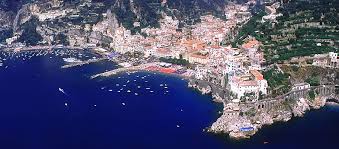


The task today is based around the story from La Bella Vita called 'The Year Brunetto Il Piccolo Fell in Love' by Vida Adamoli.
Your task is to create an information page for the National Geographic magazine about the society and cultures of different places in the World. You have been asked to write about young men, relationships and marriage in Southern Italy.
You need to adapt information from the source text and think carefully about the stylistic features of your new text. The next activities will help you to do that. You can do them in any order but the outcome at the end of the lesson needs to be the information page (300-400 words). You will use from "During the first year of our friendship.......to........"as a possible husband for their plainer daughters."
TASK A
You need to understand the key stylistic and linguistic features of the genre. Have a look at this example and make notes on it. You can use the framework here to help you if you want. You can annotate, make notes or complete the framework. You need to be able to comment on a range of framework features so that you can use the same style in your own writing. It is REALLY important to understand the AUDIENCE of this piece!
TASK B
You need to decide which information is relevant for your text. You can have a go at finding the right information yourself or you can do a quick task to support you. Find and highlight the relevant sections from the source text based on the points made here. They are all muddled up so you will have to read carefully.
Once you feel prepared, you need to write the text.
Enjoy!
Nina
Friday, 11 March 2016
Hello
So, here we are...Friday afternoon again! Last push until the weekend....
The aims for today's lessons are:
So, here we are...Friday afternoon again! Last push until the weekend....
The aims for today's lessons are:
- to complete an assessment of an exemplar response based on the Lataifa task and to peer assess each others' work in order to really understand what is expected in the text adaptation task and the commentary
- to understand the key linguistic and stylistic features of travel writing
TASK 1:
Read through the exemplar student response based on a speech aimed at an audience of young people. How good is the response? Complete the table here to evidence your response. What mark would you give it?
Do the same for the commentary.
Extension: Read the examiner's report here for some extra guidance on commentary writing.
TASK 2:
Now peer assess someone else's work. You need to sway your work via email. Use the table and email the feedback back to your partner.
TASK 3:
Read through the slides on the features of travel writing.
Now, annotate each example of travel writing here, highlighting the key linguistic and stylistic features based on your understanding of the genre.
EXTENSION / HOMEWORK:
Use any time left to complete any summaries of stories we have used so far for the text adaptation tasks:
A Co-op Building
Waiting for Juan
Aloft in Paris
Barefoot at Shanzu
Lataifa
These summary sheets must be completed by the end of next week.
The next story we will use is The Year Bruentto Il Piccollo Fell in Love
Have a really great weekend but only if you don't owe me any work!!!
Nina
Friday, 4 March 2016
Preparing a Speech
Hi all
- In today's lesson we are focussing on using your understanding of how speeches work so that you can write your own speech as part of a text adaptation task.
- Here is the powerpoint for today's lesson (but I have also put some of the links and resources here!) Speeches Powerpoint Link
Obama's Speech
Copy of Obama's speech
Key Features of Speeches
- Go through the text 'Lataifa' from 'In an Antique Land.'
What do you find out about the following characters? How are they related to each other? Who are they married to? What is their status? What do they wear?
Sheikh Musa
Abu Ali
Hasan
Ahmed
Jabir
Ustaz Mustaza
Sakkina
Plan a response for the speech task. When you have noted down some ideas, check against the list below:
Suggested Points to focus on for Lataifa response
Aim to complete your adaptation in the lesson.
Write a commentary for homework: use this commentary framework to help.
Wednesday, 24 February 2016
Dave's 'death' in AHWOSG
From pages 304 to 309, Dave describes a moment in time when he thinks he is dying (he has a kidney stone).
Using integrated literary and linguistic approaches, explore the ways Eggers presents death and illness in this scene. What insight do we get to his character? How does the language link to the key themes of the book? How does the language link to the context of the book?
Here are some language points to consider:
Discourse and Structure:
Lexis and Semantics:
Grammar:
Here are some contextual and thematic points to consider:
AIDS, death, illness, guilt, pain, sex, desire, family, writing, humour
Using integrated literary and linguistic approaches, explore the ways Eggers presents death and illness in this scene. What insight do we get to his character? How does the language link to the key themes of the book? How does the language link to the context of the book?
Here are some language points to consider:
Discourse and Structure:
- use of spoken language features
- use of short paragraphs
- how Eggers digresses
- use of hyphens
- use of bathos
- use of dialogue - free direct speech
- use of italics
Lexis and Semantics:
- use of dynamic verbs
- use of expletives
- use of allusion and imagery
- use of capitalisation
Grammar:
- use of interrrogatives / declaratives / exclamatory sentences
- use of minor sentences
- use of modal verbs
- use of past and present tense
Here are some contextual and thematic points to consider:
AIDS, death, illness, guilt, pain, sex, desire, family, writing, humour
Wednesday, 17 February 2016
The MTV Narrative Device in AHWOSG
Much of Chapter 6 is made up of the interview Eggers had in order to appear on MTV's reality show The Real World. However, not long into the interview it becomes apparent that this is actually a narrative device by Eggers and the interview did not happen in this way (if at all?!)
There is a hint that this might be the case as he introduces the interview on page 184:
'"Really?" I say, feeling a format change coming, one where quotation marks fall away and a simple interview turns into something else, something entirely so much more.'
In the opening section of the interview, Eggers describes the place where he grew up; a place called Lake Forest. This was a very white, middle class suburb and there was a real lack of cultural diversity:
'Homogeneous, yes; intolerant, no. It was overwhelmingly white , of course, but racism of any kind - at least outwardly expressed - is kind of gauche, so we basically grew up without any kind of prejudice, firsthand, or even in the abstract.'
Eggers digresses into a narrative about a racist kid, who was his first experience of bigoted thinking. He also tells a story of Mr T (look him up - from a programme called the A Team The A Team) and his daughters. There were so few black people in the town that he can count how many were in his school.

The next story ( and this is all they are) is about the games the children played: 'Most of the things we did together involved some sort of vandalism, come to think of it, throwing stuff at cars.....we were bored and loved the thump of a projectile hitting a passing car, truck, whatever. It kept escalating.'
There is also a story about death and a childhood response to the suicide of the father of a childhood friend (Ricky). We get a sense of a child'd point of view about death (p195 - 196) and how they don't always engage with or have the same sense of enormity that an adult has. Ricky compares seeing his father die to a scene in The Raiders of the Lost Ark Face Melt Scene.
On Pages 196-7 the reader is presented with the idea the interview is just a narrative device.
'So tell me something: This isn't really a transcript of the interview, is it?
No.'
It;s not much like the actual interview at all, is it?
Not that much, no
This is a device, this interview style. Manufactured and fake.
It is.'
Padlet Page for notes about the interview.
What do we find out about Dave's motivation for appearing on the show (paralleled with writing the book)? What do we find out about his past? His parents? What sort of person is he? Make notes on the section you have been given and post on the padlet page.
There is a hint that this might be the case as he introduces the interview on page 184:
'"Really?" I say, feeling a format change coming, one where quotation marks fall away and a simple interview turns into something else, something entirely so much more.'
In the opening section of the interview, Eggers describes the place where he grew up; a place called Lake Forest. This was a very white, middle class suburb and there was a real lack of cultural diversity:
'Homogeneous, yes; intolerant, no. It was overwhelmingly white , of course, but racism of any kind - at least outwardly expressed - is kind of gauche, so we basically grew up without any kind of prejudice, firsthand, or even in the abstract.'
Eggers digresses into a narrative about a racist kid, who was his first experience of bigoted thinking. He also tells a story of Mr T (look him up - from a programme called the A Team The A Team) and his daughters. There were so few black people in the town that he can count how many were in his school.
The next story ( and this is all they are) is about the games the children played: 'Most of the things we did together involved some sort of vandalism, come to think of it, throwing stuff at cars.....we were bored and loved the thump of a projectile hitting a passing car, truck, whatever. It kept escalating.'
There is also a story about death and a childhood response to the suicide of the father of a childhood friend (Ricky). We get a sense of a child'd point of view about death (p195 - 196) and how they don't always engage with or have the same sense of enormity that an adult has. Ricky compares seeing his father die to a scene in The Raiders of the Lost Ark Face Melt Scene.
On Pages 196-7 the reader is presented with the idea the interview is just a narrative device.
'So tell me something: This isn't really a transcript of the interview, is it?
No.'
It;s not much like the actual interview at all, is it?
Not that much, no
This is a device, this interview style. Manufactured and fake.
It is.'
Padlet Page for notes about the interview.
What do we find out about Dave's motivation for appearing on the show (paralleled with writing the book)? What do we find out about his past? His parents? What sort of person is he? Make notes on the section you have been given and post on the padlet page.
Friday, 5 February 2016
Review of Commentary Writing and a Mini Text Adaptation Task
Commentary Writing
Read a student response to the task you completed last week.
Now read the commentary to the task attached here. Have a look at the markscheme and decide what mark you would give it. Email me your mark with an explanation about why it would get that mark. What are its key features? What is effective about it? What could be improved?
Mark Scheme Link
Here is a link to the key aims of writing a commentary (which you have seen before!)
Some of you are worried about this part, but just remember it is a min-analysis! All AO1!
Mini Text Adaptation Task
On returning to New York, Francesca
writes her autobiography of the time she spent in Paris which is going to be
published.
Using material from the extract,
write a promotional text to be printed on the back cover of the book.
Page 243 – 245 (Most females…murky,
dank, sex)
First, you need to explore some of the features of an autobiography promotional text. Read the two examples and write a quick analysis of each based on the following questions:
What is the purpose of the text? Who is the audience? What is the overall tone? What type of sentences are used? What tense is it written in? What type of lexis is used? How is it structured?..... and so on!!
Next, read the extract and jot down what we learn about Francesca. Use as much information as you can in the promotional material. It can be 150 - 200 words.
Subscribe to:
Posts (Atom)